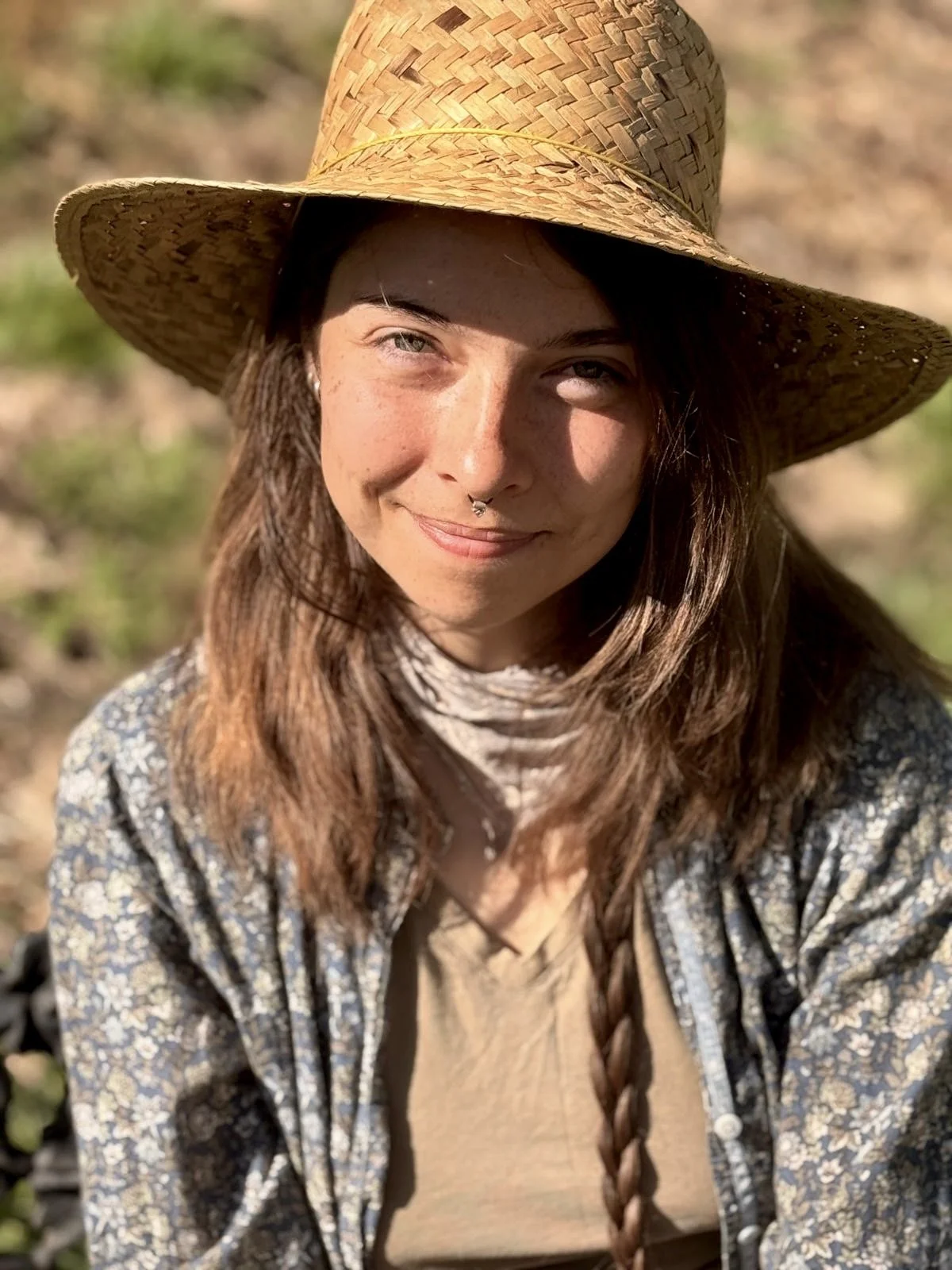
Lark Stallsmith
BAsketry & Fiber Arts
About the Artist
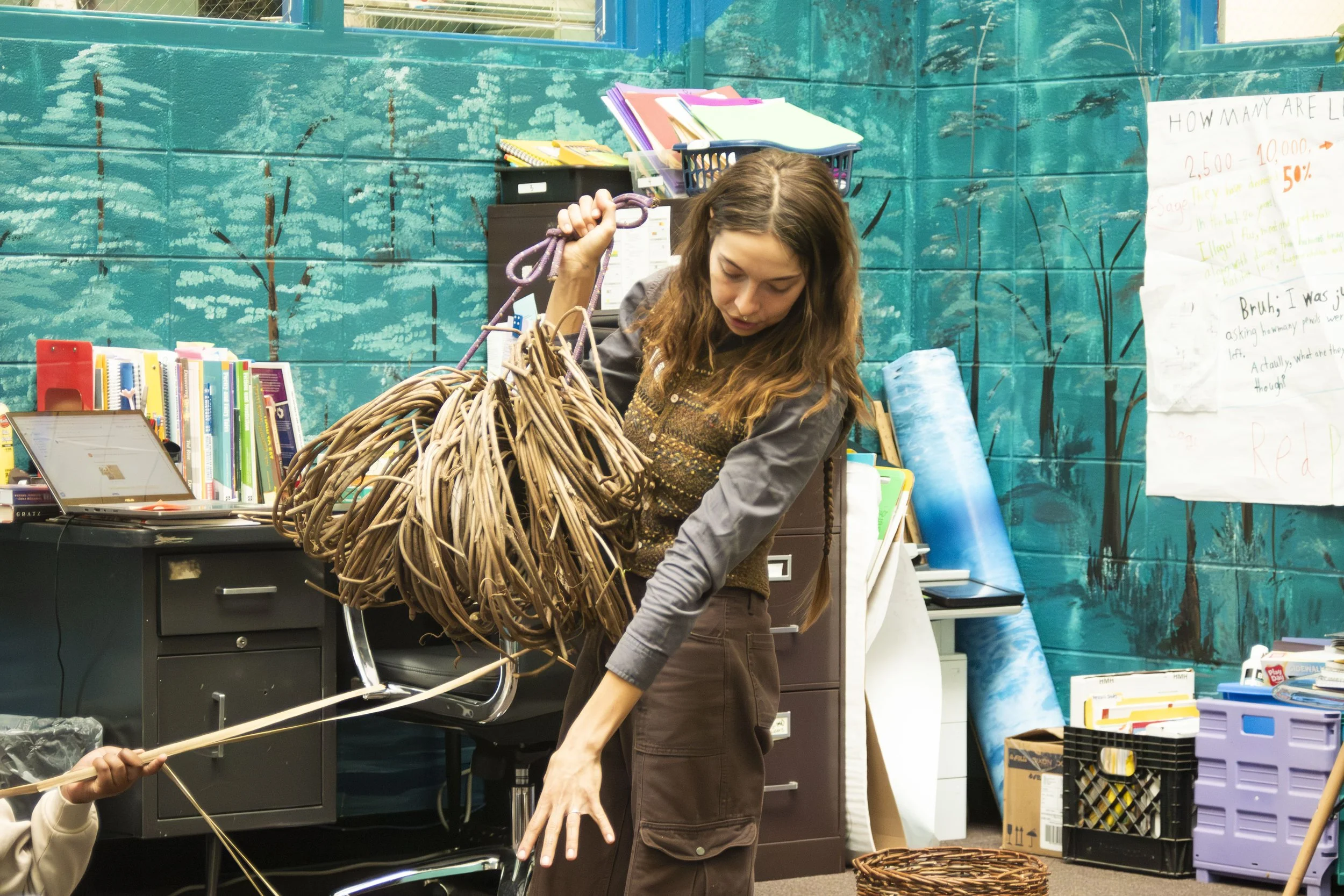
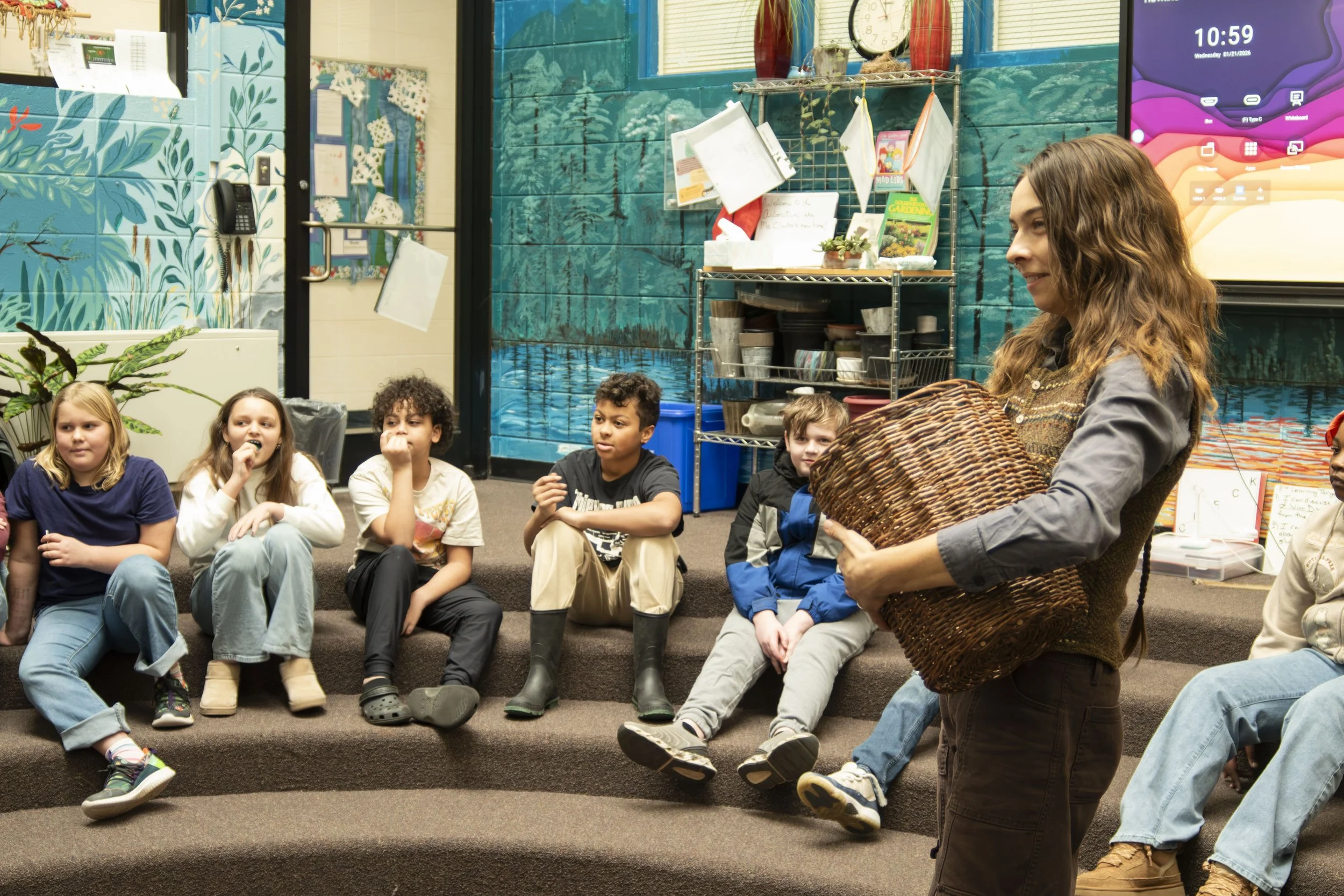
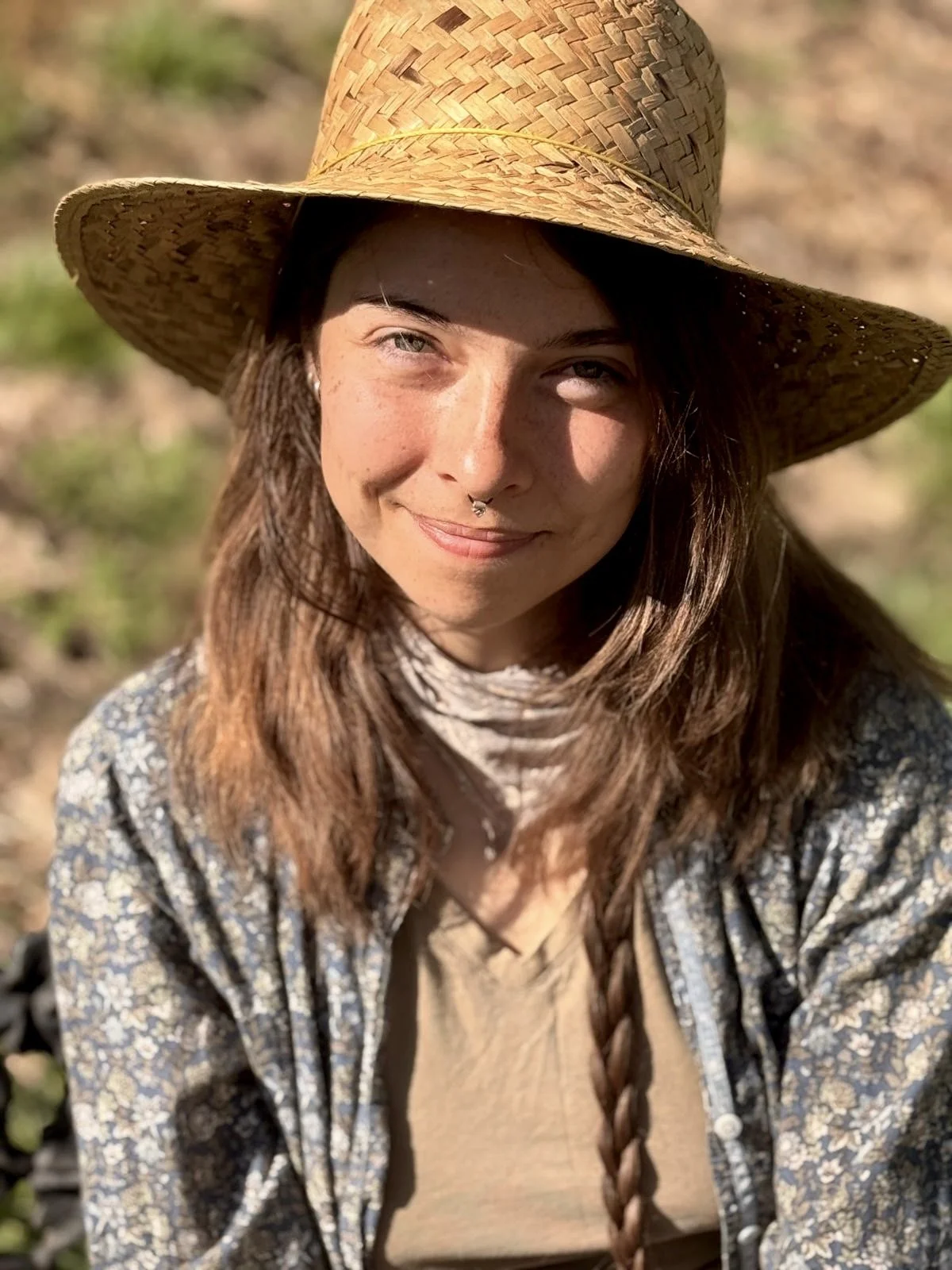
Lark Stallsmith is a basketry and fiber arts artist and educator with nearly a decade of experience in basket weaving. Through her time living in WNC, Lark has apprenticed under skilled local basket weavers and has taught at John C Campbell folk school, earth skills gatherings, and summer camp programs. In the classroom, she leads hands-on workshops that immerse students of all ages in the rich traditions of formerly common and essential craft. Lark uses regionally foraged plants (both native and invasive) to weave functional and sculptural pieces. Her teaching emphasizes appreciation for our local plants as materials, their roles in the ecosystem, indigenous traditions and the inarguable timeless value of using our hands to create.
RESIDENCY OFFERING: Vine Vessel voyage
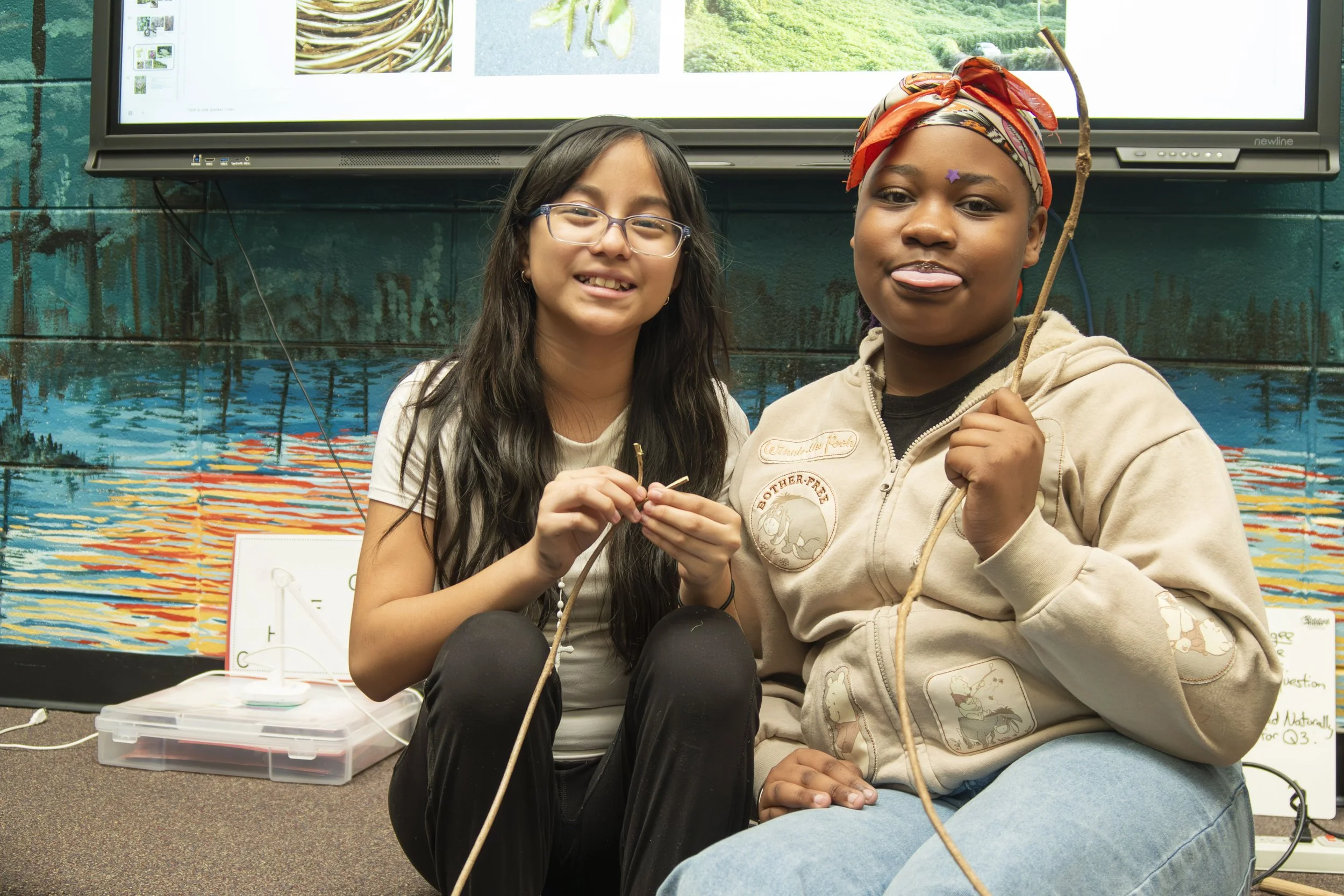
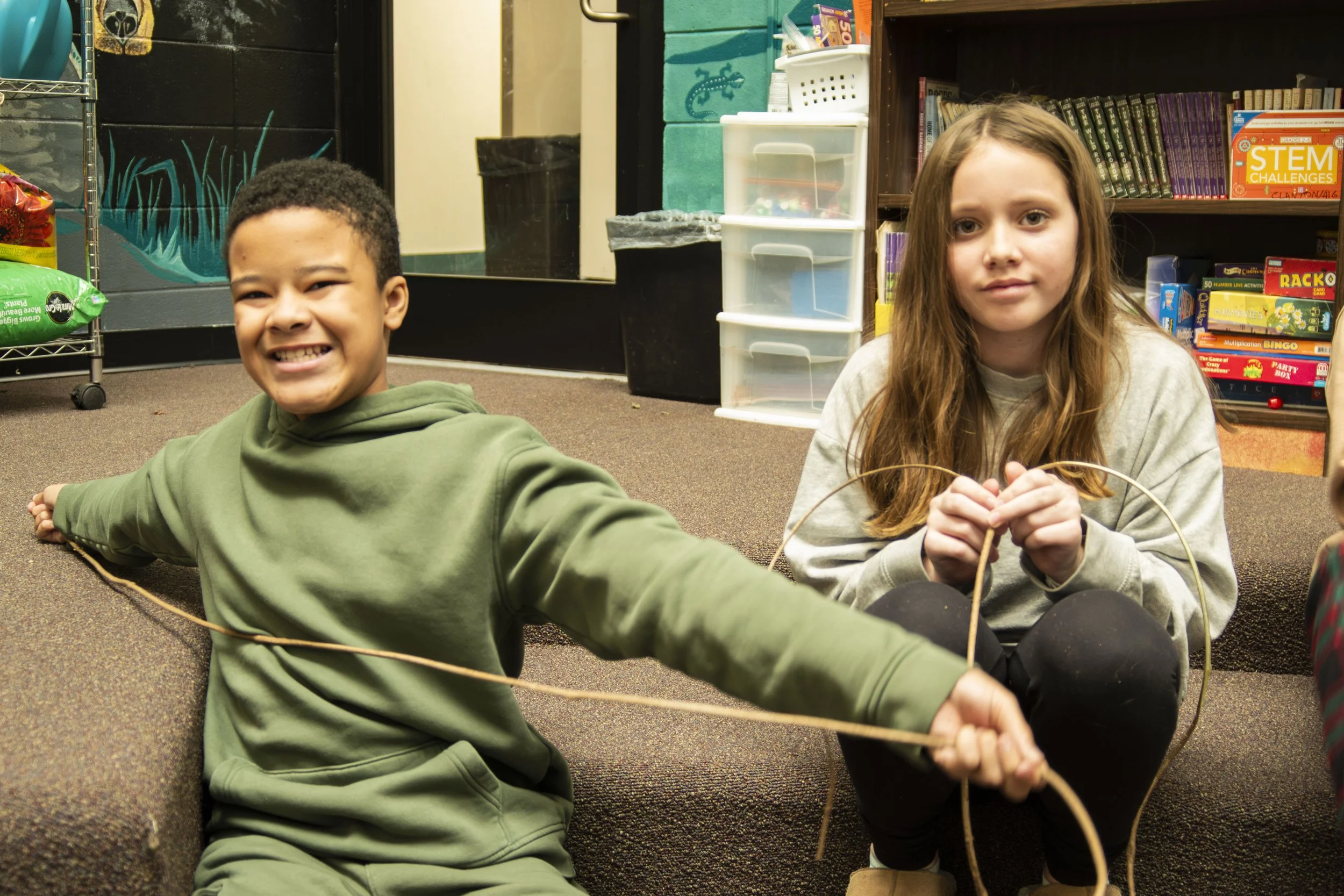
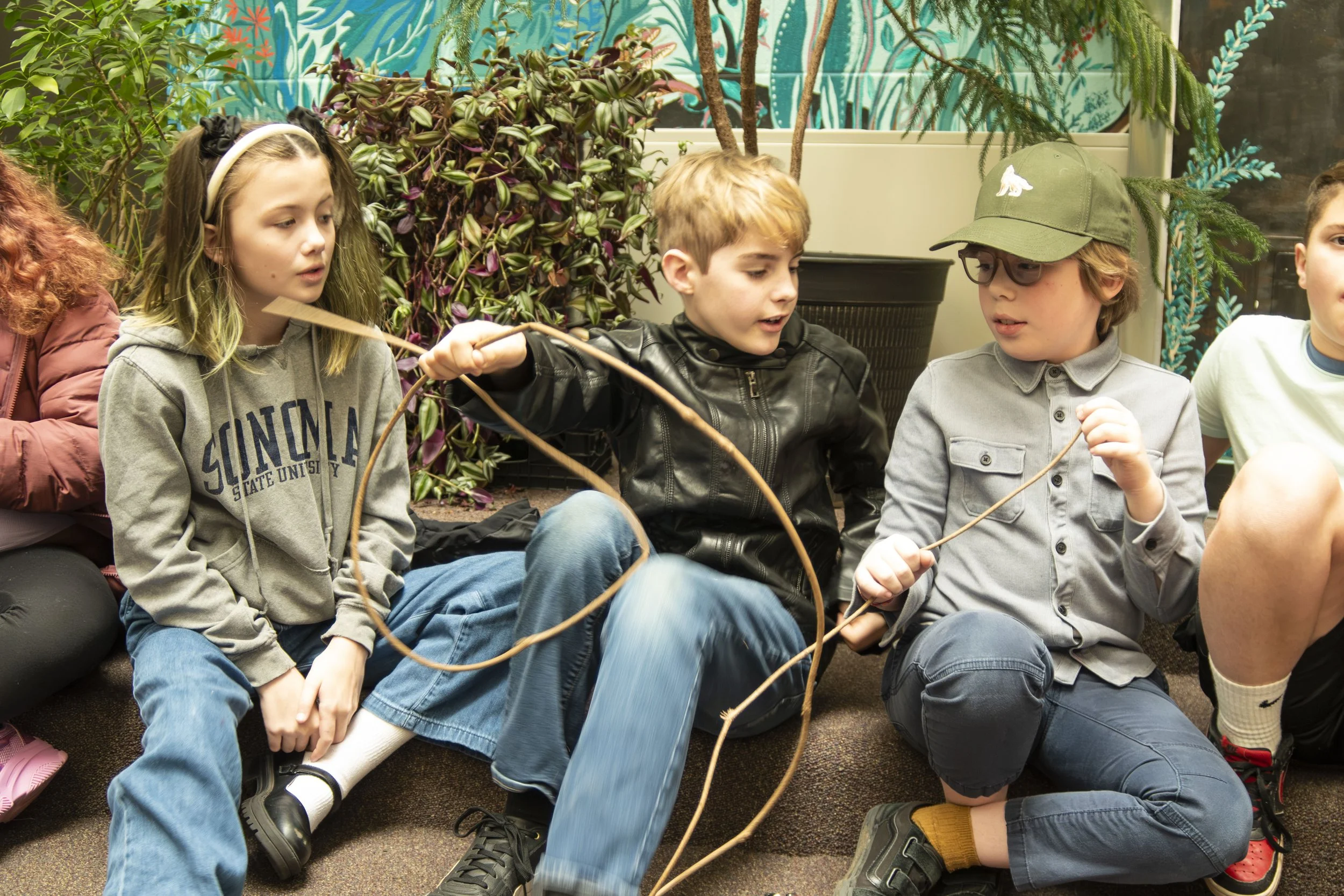
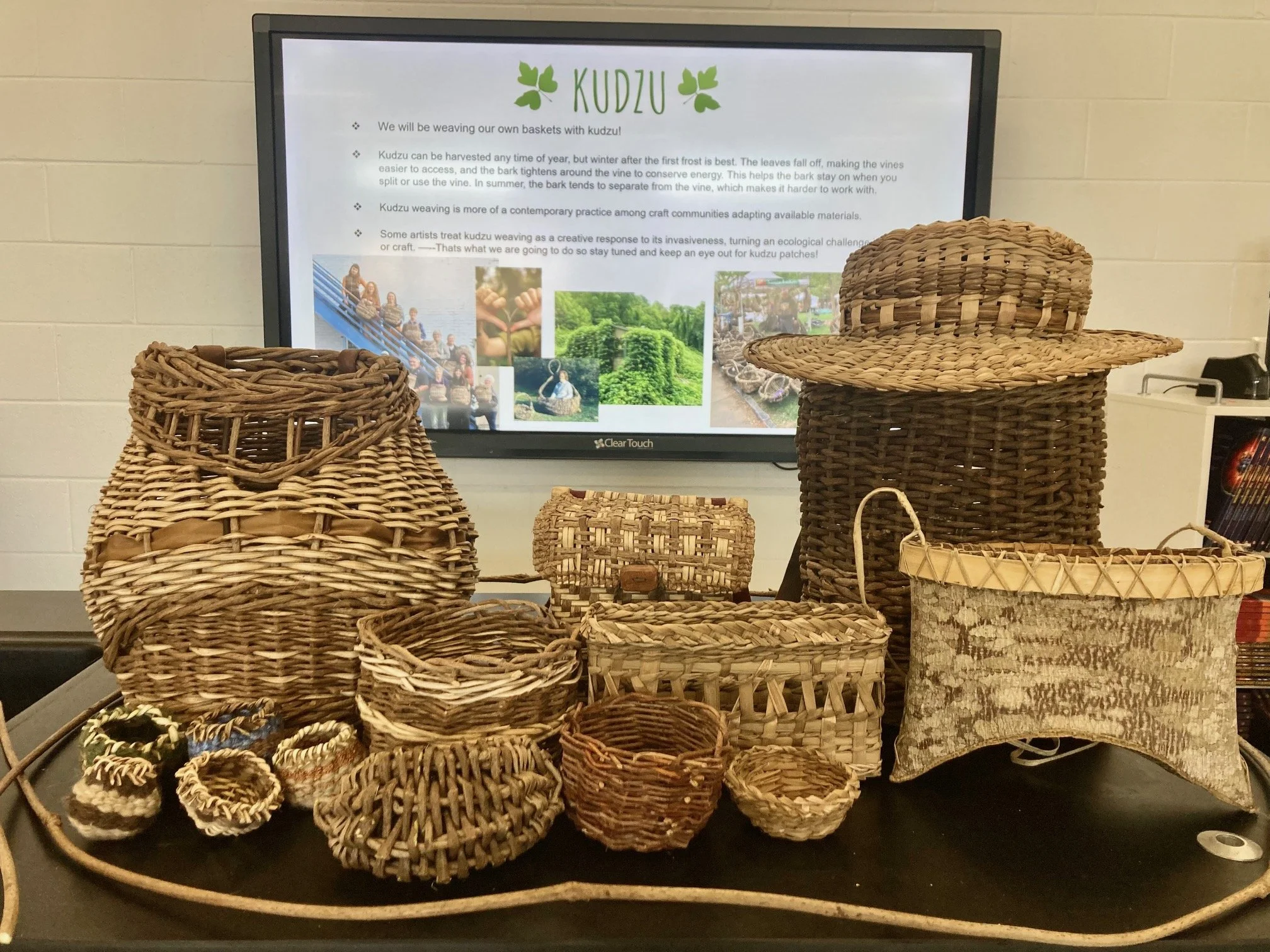
Students will learn to weave baskets and sculptural forms using natural fibers that can be harvested in our region. Our materials will not be bought and instead sought! We will focus on using wild vines such as kudzu, bittersweet, wisteria, honeysuckle and grapevine, turning often overlooked local plants into valuable weaving materials. Depending on location and availability, class may be able to be taken outside to search for and harvest wild vines to learn where they grow and to incorporate them in woven pieces. Because weaving encompasses much in way of cultural practices, history, ecological studies, survival skills...etc, this residency will be geared towards relevancy to the curriculum provided by the teacher.
Artist Contact Hours: 2-3 hours - 2-3 hours per class for 1 day, or 1 hour class for 2 – 3 consecutive days
Grades: 5th -12th (artist will be able to adapt the style and difficulty of woven piece for the grade level and curriculum)
Learning Outcomes:
By the end of this residency, students will…
Understand the significance of baskets in history
Engage with local plants through botanical identification and through processing vines into vessels
Be encouraged to practice individual expression as every basket is as unique as every weaver
Have a woven piece they can be proud of and replicate with weaveables in their neighborhood.
Timeline
Day 1: Introduction
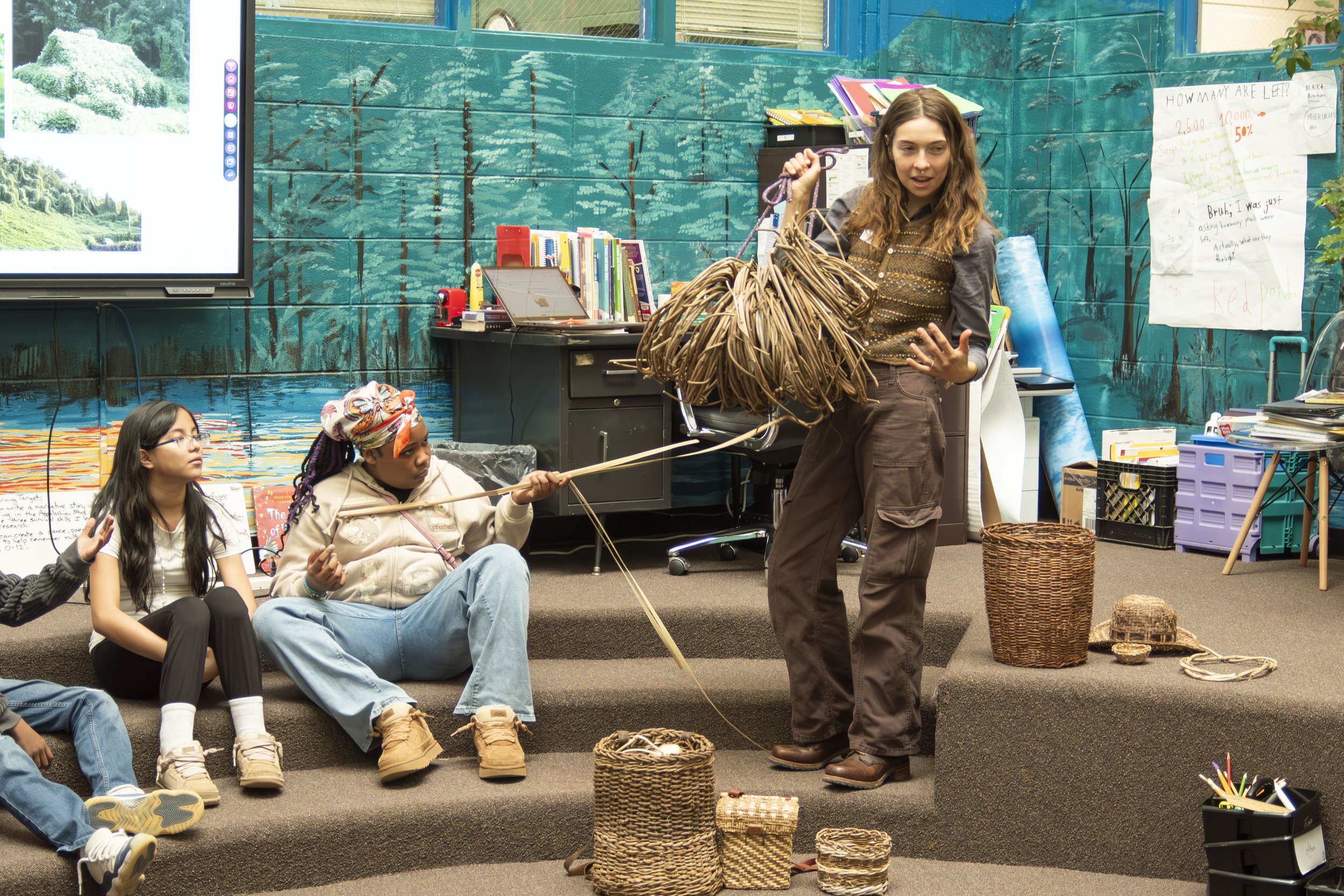
Depending on technology available, artist will share a slideshow on indigenous basketry throughout the world and in Western North Carolina, highlighting the historic significance woven vessels have played in everyday life (and still do!).
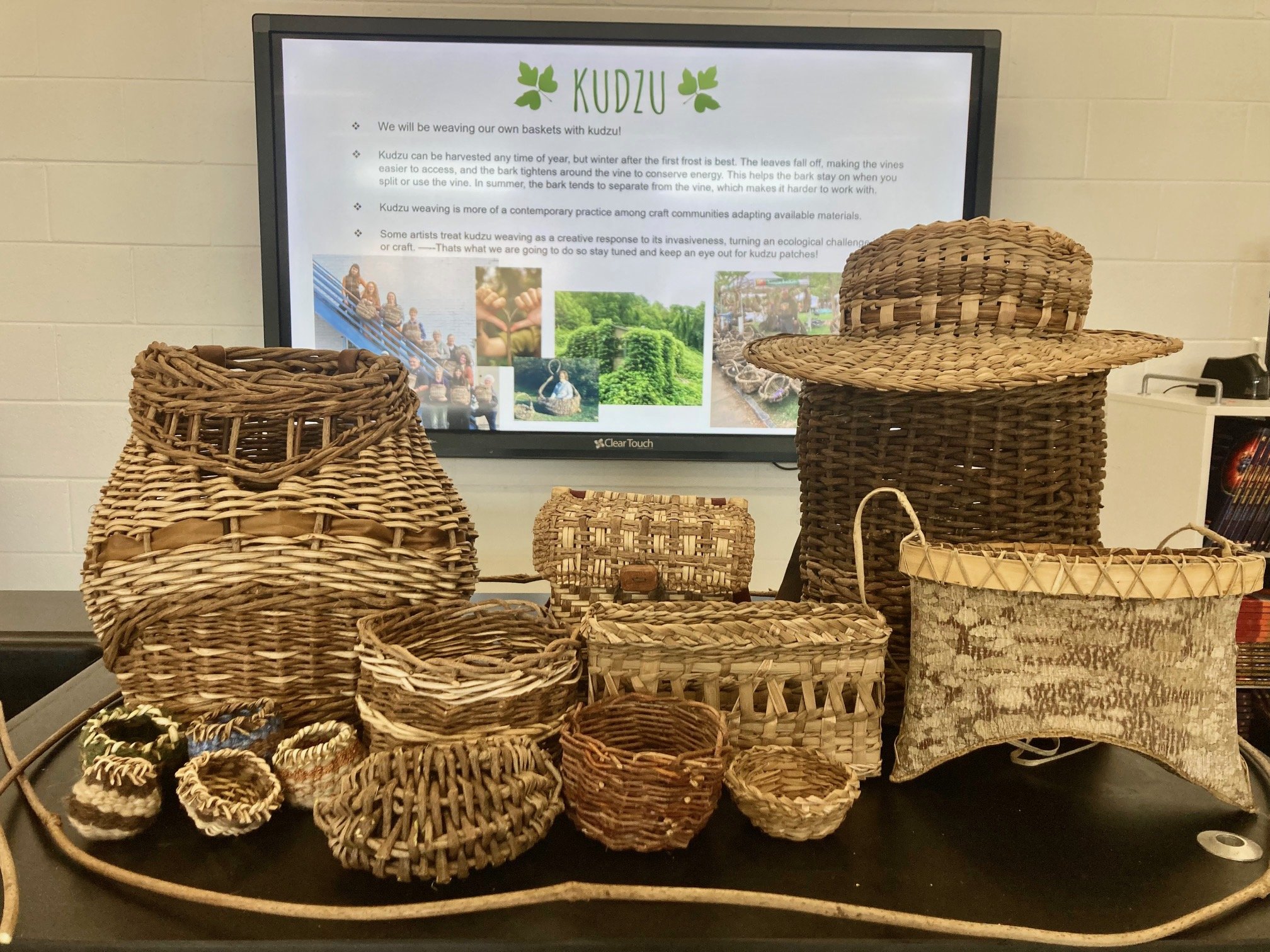
Artist will show and tell several baskets, differing in style and plant materials harvested locally.
After a demo, students will handle and peel wild plant material to prep for weaving.
Students begin weaving their basket base with free- style weaving techniques, an intuitive and fun basket building style.
Depending on students creative choices, various weaver materials will be incorporated, making each basket unique to the maker. This allows students creative expression in working with the plants.
Day 2 & 3: Exploration & CREATION
Depending on time of first class, students will either begin the base of their basket or continue weaving, until finished and have the option of adding to their baskets, incorporating wild “bling”, handles or hangers.
Depending on individuals’ pace, students can go on creating another piece now that they’ve integrated the process and may have other ideas come up.
Students complete their baskets with finishing touches or extra support.
Artist will facilitate a show and tell on their finished pieces, explaining what they learned, what they intend to do with the basket, how they felt about the process, what plant fibers they used...etc.